The Complete 2026 Guide to Growing Your Business on Meta
Introduction: The New Era of Social Media Advertising
For years, digital marketers debated whether newer social media platforms would make Facebook obsolete. In 2026, the platform remains a major force in digital marketing, but the way businesses use it has changed fundamentally.
Facebook Marketing Is One OF The Social Media Marketing Strategy Use By Digital Marketing Agency.
If you are wondering, "What is Facebook marketing today?" the answer is very different from even three years ago. Gone are the days when you could post a link, boost it for twenty dollars, and watch the sales roll in. Today, the Meta ecosystem is driven by artificial intelligence, user-generated content, and community-centric engagement.
Whether you are a local service provider, a growing e-commerce brand, or a B2B enterprise, understanding how to leverage this platform is critical. This comprehensive guide will break down exactly what Facebook marketing entails, the strategies that are dominating feeds right now, and how you can build a sustainable growth engine for your brand.
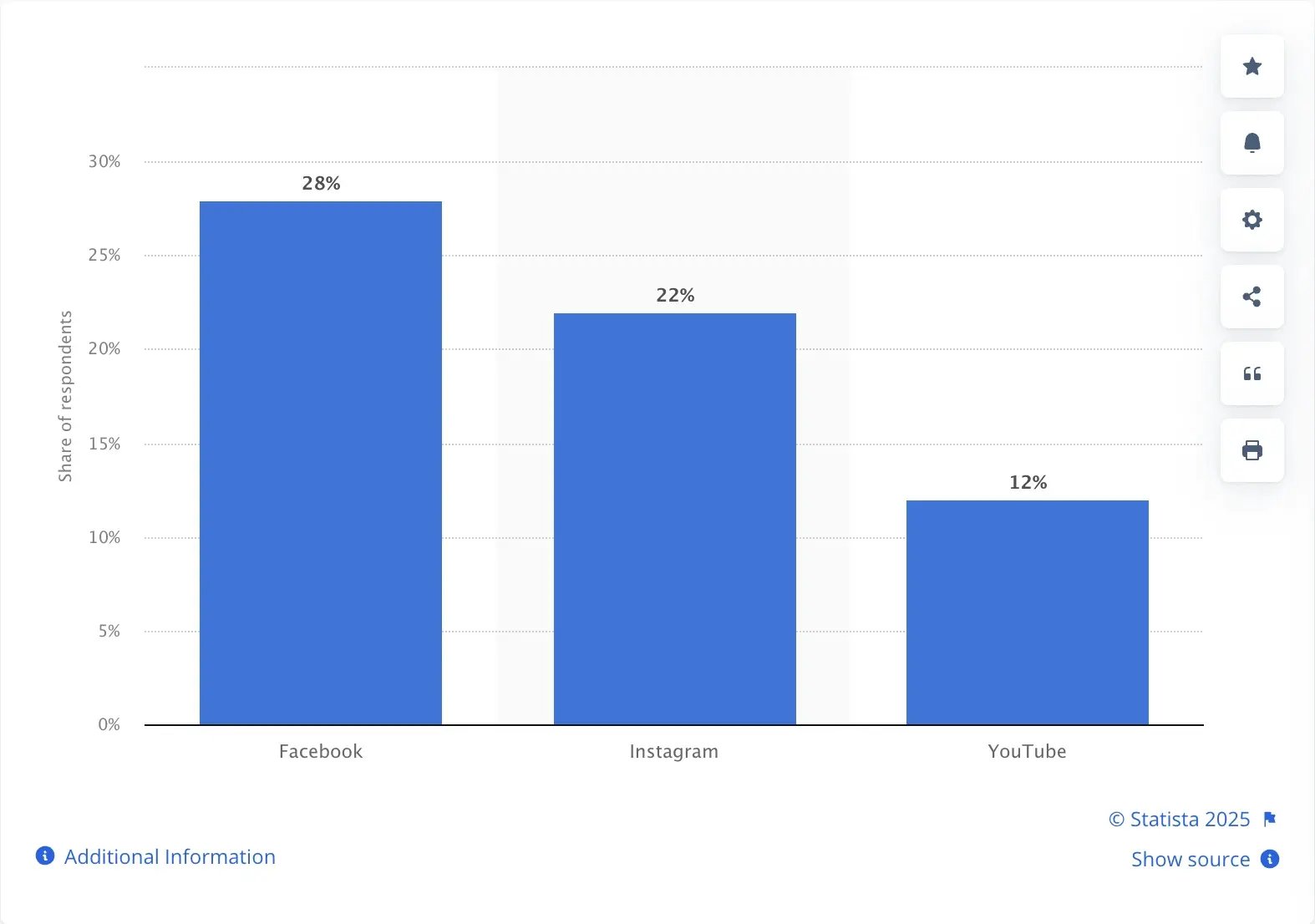
According to statistics, Facebook and Instagram are the 2 Social Platforms with the Highest ROI. So, the Meta Ads Manager Is A Must For Advertising Agency Or Digital Marketer To Learn
What Exactly is Facebook Marketing?
Facebook Marketing Belong To The Online Marketing Category.
At its core, Facebook marketing is the strategic use of the Facebook platform (and the wider Meta ecosystem, including integrations with Messenger and Instagram) to connect with your target audience, build brand awareness, and drive measurable business results.
It is not a single action, but a multi-faceted approach that generally falls into three distinct categories:
- Organic Marketing (Community & Content): This involves the content you post on your Business Page, the stories you share, and the Facebook Groups you manage or participate in. Organic reach is no longer about broadcasting promotional messages; it is about community building, authentic storytelling, and creating spaces where your audience feels heard.
- Paid Advertising (Meta Ads): This is the financial engine of the platform. Using the Meta Ads Manager, businesses pay to place their content in front of specific users. In the modern era, this system is heavily automated, relying on machine learning to find the buyers most likely to convert.
- Conversational Commerce: This is the integration of customer service and sales directly into the social experience via Messenger and WhatsApp. It allows customers to ask questions, receive support, and even make purchases without ever leaving the app.
A successful marketing strategy does not rely on just one of these pillars; it weaves them together to create a seamless customer journey from discovery to purchase.
The Great Shift: Why Old Tactics No Longer Work
To succeed in Facebook marketing today, you must unlearn some of the foundational advice from the past decade. The platform’s algorithm has evolved to prioritize user experience and meaningful interaction over passive consumption.
1. Creative is the New Targeting
In the past, advertisers spent hours building hyper-specific audience profiles—targeting users based on exact zip codes, niche hobbies, and specific job titles. Today, the algorithm handles the audience selection. With the rise of Meta's Advantage+ campaigns, broad targeting has become the gold standard.
Because you are no longer manually restricting who sees your ads, your creative asset (the video or image) does the targeting for you. A video addressing a specific pain point will naturally capture the attention of the people experiencing that problem, effectively filtering the audience in real-time. If your creative is generic, your results will be poor, regardless of your budget.
2. The Move Toward Private Communities
Users are spending less time passively scrolling through their main feeds and more time interacting within private, niche communities. Facebook Groups have become a sanctuary for users to ask questions, share genuine opinions, and connect over shared interests. Brands that participate in these discussions—providing value rather than just dropping promotional links—are seeing far higher engagement and brand loyalty.
Core Pillars of a Winning Strategy
If you are building a Facebook marketing campaign from the ground up, focus your energy on these highly effective strategies.
Embrace Short-Form Video (Reels)
Video has entirely taken over the digital landscape. Facebook Reels—short, vertical videos typically lasting 15 to 30 seconds—are the ultimate tool for brand discovery. Because Reels are pushed to users who do not already follow your page, they act as the top of your marketing funnel.
The key to a successful Reel is the "hook." You have roughly two seconds to capture a viewer's attention before they swipe away. Start with a provocative question, a surprising visual, or a bold statement. Furthermore, avoid overly polished, commercial-style productions. The data consistently shows that native-looking content—videos shot on a smartphone that feel like they were made by a real person—outperforms highly produced advertisements.
Leverage User-Generated Content (UGC)
Authenticity is the currency of modern marketing. Consumers are highly skeptical of traditional advertising, but they implicitly trust peer recommendations. This is why User-Generated Content (UGC) is so powerful.
UGC involves real customers (or creators who emulate the customer experience) demonstrating your product, sharing their honest reviews, or filming a "day in the life" incorporating your service. When a prospective buyer sees someone relatable solving a problem with your product, the friction to purchase drops dramatically.
Do Not Ignore the Power of Static Images
While video dominates the conversation, one of the most surprising trends in recent years is the massive resurgence of static image ads. In a world of fleeting attention spans, a clear, well-designed image with a compelling headline can communicate value instantly.
Video requires a user to stop and watch for several seconds to understand the offer. A static image, on the other hand, is processed in a fraction of a second. Furthermore, images load instantly on all connection speeds. For direct response campaigns—where the goal is immediate clicks and conversions—simple product photos or text-on-image designs frequently outperform complex videos.
How to Launch Your Facebook Marketing Engine
Facebook Marketing Is One OF The Most Effective Digital Marketing Strategy Use Today.
Ready to put these concepts into practice? Follow this step-by-step framework to launch a modern, effective marketing strategy.
Step 1: Define Your Objective and Budget
Before you post a single piece of content, you need to know what you are trying to achieve. Are you a local bakery trying to increase foot traffic? A B2B software company looking for qualified leads? An apparel brand chasing direct sales?
Your objective dictates your strategy. If you are running paid ads, understand that the AI needs data to learn. Spreading a small budget too thin across multiple campaigns prevents the algorithm from optimizing. It is far better to run a single, well-funded campaign than five underfunded ones.
Step 2: Build a Creative Production System
Because creativity is your most important lever, you need a system to produce it consistently. You cannot rely on one good video for six months; ad fatigue is a real phenomenon where audiences stop responding to content they have seen repeatedly. Aim to test different angles, formats, and tones. For example, from a single 30-minute interview with a happy client, you could extract:
- Three short, punchy video hooks for Reels.
- A long-form written post for your main feed.
- Two quote graphics to use as static image ads.
This approach ensures you have a constant stream of fresh assets without needing a Hollywood production budget.
Step 3: Prioritize the "Engage-Through"
The algorithm rewards content that sparks conversation. When creating organic posts, do not just broadcast information; ask questions, encourage debate, and respond promptly to every comment. If a user comments on your post and you reply, you signal to Facebook that a genuine interaction is taking place, prompting the platform to show your content to more people.
Step 4: Monitor, Measure, and Iterate
Facebook provides an overwhelming amount of data. Do not get lost in vanity metrics like "likes." Focus on the numbers that impact your bottom line: Cost Per Acquisition (CPA), Return on Ad Spend (ROAS), and Lead Quality.
Make it a weekly habit to review your creative performance. If you notice your Cost Per Mille (CPM—the cost to reach 1,000 people) rising while your Click-Through Rate drops, your audience is likely experiencing ad fatigue. It is time to swap in fresh creative.
The Future is Authentic
As we look ahead, the definition of Facebook marketing will continue to shift. However, the underlying principles will remain constant. The platform will always reward businesses that prioritize human connection, deliver genuine value, and adapt quickly to new formats.To succeed, you must stop thinking of Facebook as a digital billboard where you paste your logo. Instead, treat it as a dynamic, interactive space. Share your expertise, showcase the real people behind your brand, and use the incredible power of Meta's AI to deliver those stories to the exact people who need to hear them. By focusing on authentic storytelling and rigorous creative testing, you can turn Facebook marketing from a frustrating expense into your most reliable driver of growth.